
10 Ways to Get a Premium Interior Design Look on a Realistic Budget
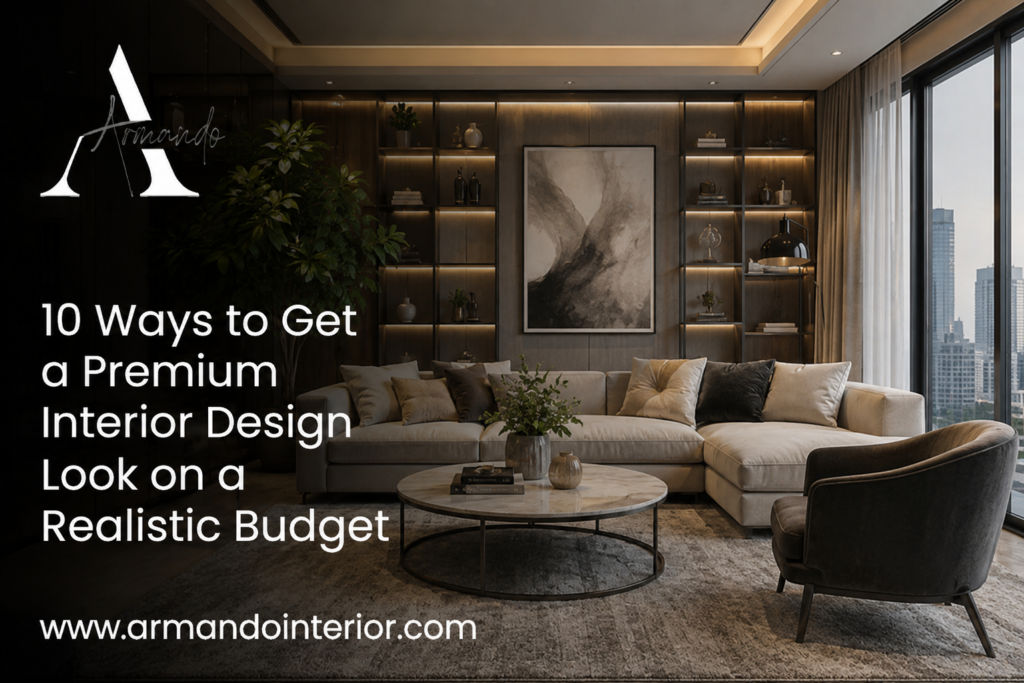
Dubai’s interior design market is often associated with luxury—marble floors, designer furniture, and headline-grabbing villa transformations. But the reality is that most homeowners are working with a genuine, finite budget and want a space that looks polished and considered without spending like it’s unlimited. The good news: achieving a premium-feeling interior design on a realistic budget is absolutely possible, if you know where to invest and where to save. This guide shares practical, tested strategies for getting an elevated, high-end look in your Dubai home without the luxury price tag. 1. Spend on What You Touch and See Most Not every surface and item in your home deserves the same budget priority. The most cost-effective approach is concentrating spend on high-impact, high-contact items — a genuinely comfortable sofa, quality bedding, well-made kitchen cabinetry — while economizing on lower-impact areas like guest room furniture or rarely-used spaces. Practical application: Allocate a larger share of your budget to your sofa, bed, and kitchen, and save on furniture for spaces used less frequently, like a guest bedroom or a formal dining area you rarely use. 2. Choose One or Two “Splurge” Statement Pieces A single, well-chosen statement piece — a striking light fixture, a genuinely beautiful coffee table, an eye-catching piece of art — can elevate an entire room’s perceived value far more than spreading the same budget thinly across many mediocre items. Practical application: Identify one focal point per main room (living room, dining area, primary bedroom) and allow a slightly higher budget there, while keeping surrounding pieces simpler and more budget-friendly. 3. Use Paint and Texture Strategically Paint remains one of the most cost-effective ways to transform a space, and texture — through wall finishes, textiles, or a single feature material — adds a premium feel without the cost of full renovation. Practical application: Consider a textured paint finish or a single accent wall in a warm, sophisticated tone rather than repainting an entire home in a flat, basic finish — the cost difference is often minimal, but the visual impact is significant. 4. Prioritize Lighting Over Furniture Quantity Good lighting design does more to elevate a space’s perceived value than almost any other single factor, and it’s often more affordable than people assume. A room with excellent, layered lighting and modest furniture will consistently look more premium than a room with expensive furniture under a single harsh overhead light. Practical application: Before buying additional furniture, invest in a few well-placed lamps, a statement pendant light, or dimmer switches for existing fixtures — the cost is relatively low compared to the visual transformation. 5. Mix High and Low — Strategically, Not Randomly Premium-looking interiors rarely use exclusively expensive items — they mix a few genuinely high-quality pieces with more affordable items, chosen carefully so the mix doesn’t look mismatched. Practical application: Pair a higher-quality sofa with more affordable accent chairs, or a statement dining table with budget-friendly dining chairs — as long as the overall color and material palette stays cohesive, the mix reads as intentional rather than cheap. 6. Invest in Quality Basics, Save on Trend Items Trend-driven pieces (a specific color sofa, a particular decorative style) tend to feel dated faster, while quality basics (a well-made neutral sofa frame, solid wood furniture, classic lighting shapes) tend to remain relevant for years. Spending your larger budget on basics and your smaller budget on trend-driven accents is a smarter long-term allocation. Practical application: Choose a neutral, well-constructed sofa as a long-term investment, and express current trends through more affordable, easily replaceable items like cushions, throws, and small décor pieces. 7. Use Rugs and Textiles to Transform a Space Affordably A good rug can visually anchor and elevate a room more than almost any other single item, and quality curtains or textiles instantly add a sense of finished polish to a space that might otherwise feel unstyled. Practical application: If budget is tight, prioritize a quality rug for your main living area over additional furniture pieces — it has an outsized visual impact relative to its cost. 8. Get Smart About Custom Joinery Fully custom joinery throughout a home can be expensive, but selectively used custom pieces — a single built-in shelving unit, a tailored TV wall unit — can look significantly more premium than off-the-shelf furniture, often at a comparable or even lower cost when planned efficiently. Practical application: Consider custom joinery for one or two key pieces (built-in wardrobes, a media wall) rather than throughout the entire home, and use quality ready-made furniture elsewhere. 9. Declutter and Style Intentionally This is genuinely one of the most cost-effective “upgrades” available — a well-edited, thoughtfully styled space with fewer, more intentional items almost always looks more premium than a cluttered space full of mismatched pieces, regardless of how much was spent on each individual item. Practical application: Before buying anything new, go through your existing space and remove anything that doesn’t serve a clear function or add genuine visual value — an edited space instantly feels more elevated. 10. Work With a Designer for Space Planning, Even on a Budget It might seem counterintuitive to hire a designer when budget is a priority, but professional space planning often saves money in the long run by avoiding costly furniture-buying mistakes (wrong scale, wrong layout, items that don’t work together) and identifying where your limited budget will have the most visual impact. Practical application: Many Dubai design companies, including Armando Interior, offer consultations that can help you prioritize spend effectively — even for a partial redesign or phased project — rather than requiring a full luxury budget commitment upfront. Where to Save Without It Looking Like You Saved Where Not to Cut Corners A Sample Phased Budget Approach If your total budget is limited, consider phasing your project rather than compromising quality across everything simultaneously: This approach lets you achieve a genuinely premium result in your most-used spaces immediately, while spreading the remaining investment over time as budget allows. Frequently Asked Questions About Budget Interior Design in Dubai What’s a realistic budget for