
Retail Store Interior Design That Increases Footfall and Sales
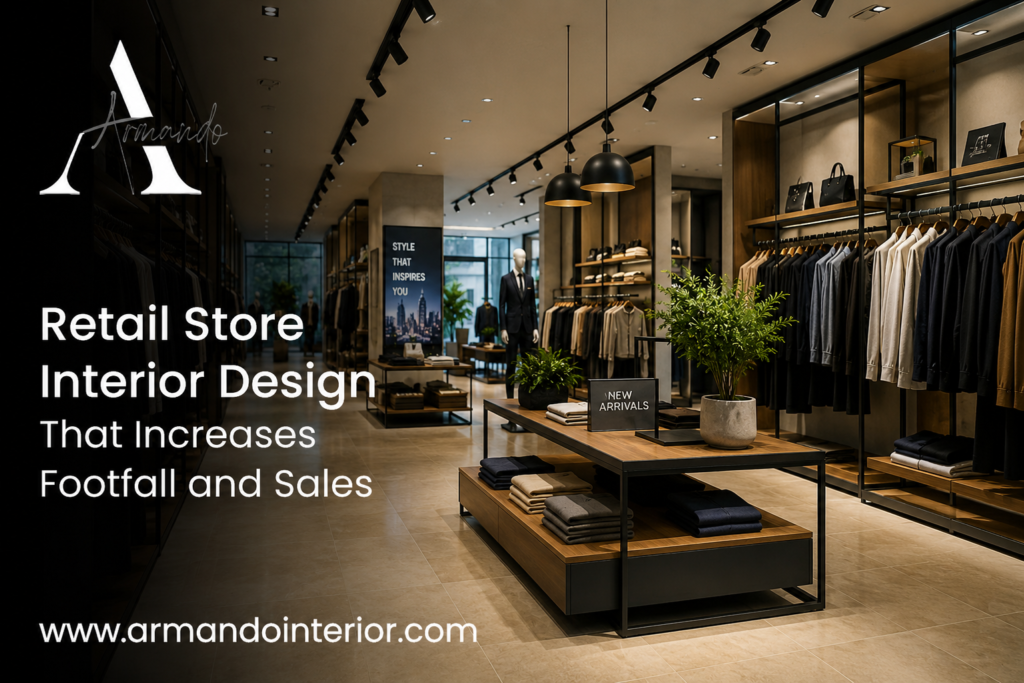
In Dubai’s retail landscape — from mall units in Dubai Mall and Mall of the Emirates to standalone boutiques in Jumeirah and Al Barsha — store interior design isn’t a purely aesthetic decision. It directly shapes how many people walk in, how long they stay, and ultimately, how much they buy. With retail competition in Dubai as intense as almost anywhere in the world, the stores that consistently perform well are the ones designed with genuine retail psychology and customer behavior in mind, not just visual appeal. This guide covers the practical design principles that drive real retail performance, specifically relevant to Dubai’s retail environment. Design Starts With Understanding Customer Behavior Before any layout or material decisions, effective retail design starts with understanding how customers actually move through and experience a space: 1. Storefront and Entrance Design Your storefront has seconds to convince a passing customer to walk in, particularly in high-footfall mall environments with intense competition for attention. 2. Strategic Layout Planning Retail layout directly affects both customer experience and sales performance. Common layout approaches, each suited to different retail categories: The right layout depends entirely on your product category and desired customer experience — a luxury boutique and a high-volume fashion retailer need fundamentally different spatial strategies. 3. Lighting Design That Sells Lighting is one of the most powerful — and most commonly underutilized — tools in retail design, directly affecting how products look and how long customers linger. 4. Visual Merchandising and Product Placement How products are displayed significantly affects purchase behavior: 5. Fitting Rooms and Service Areas (Fashion Retail) For fashion and apparel retail specifically, fitting room design has a disproportionate impact on conversion rates: 6. Checkout and Point-of-Sale Design The checkout experience is a customer’s final impression, and its design affects both efficiency and last-minute purchase opportunities: 7. Material and Finish Selection for Retail Durability Retail spaces experience significantly more foot traffic and handling than residential interiors, making durability a critical design consideration: 8. Brand Identity Integration Throughout the Space A retail interior should reflect brand identity consistently, not just through a logo at the entrance: 9. Sensory Design Beyond Visuals The strongest retail experiences engage more than just sight: 10. Designing for Different Retail Categories in Dubai Budgeting for Retail Interior Design in Dubai Retail fit-out costs in Dubai vary significantly by category and location, generally ranging from AED 500–1,200 per sq ft for a full interior fit-out including flooring, fixtures, lighting, and joinery — with luxury and jewelry retail often exceeding this range due to security infrastructure and premium finish requirements. Mall locations typically have specific landlord fit-out guidelines and approval processes that should be factored into both budget and timeline from the outset. Frequently Asked Questions About Retail Store Interior Design in Dubai How long does a typical mall retail store fit-out take in Dubai? Mall retail fit-outs typically take 6–12 weeks depending on store size and complexity, though this can extend if landlord approval processes or specialized fixtures (security cases for jewelry, refrigeration for F&B) are involved. Most malls in Dubai also enforce specific working hours and fit-out guidelines that should be factored into your timeline planning from the outset. What design elements matter most for a small boutique store under 500 sq ft? For small boutique spaces, lighting design and a clear, uncluttered layout matter disproportionately, since there’s less room to compensate for poor design choices with sheer product volume. Focusing on a strong entrance moment, quality lighting, and a curated (rather than crowded) product display tends to perform better than trying to maximize merchandise density. Does store design really affect sales, or is product quality all that matters? Store design has a measurable effect on dwell time, browsing behavior, and purchase conversion, independent of product quality — well-designed lighting, layout, and visual merchandising consistently increase the likelihood that a customer who enters actually makes a purchase. Product quality gets customers to consider buying; design influences whether they feel comfortable enough to complete that decision in-store. How often should a retail store’s interior be refreshed? Most retail interiors benefit from a meaningful refresh (updated displays, lighting adjustments, seasonal styling) every 12–18 months to stay visually current, with a fuller redesign typically warranted every 4–6 years depending on wear, brand evolution, and changing customer expectations in a competitive market like Dubai’s. What’s the biggest retail design mistake Dubai store owners make? Overcrowding the entrance and decompression zone with too much merchandise or promotional signage is one of the most common mistakes, since it overwhelms customers before they’ve had a chance to orient themselves in the space, often reducing rather than increasing engagement with products further inside the store. Do luxury and mass-market retail stores need fundamentally different design approaches? Yes — luxury retail generally benefits from more spacious layouts, lower merchandise density, dramatic accent lighting, and a slower, more consultative customer journey, while mass-market retail typically prioritizes efficient navigation, higher merchandise visibility, and layouts optimized for faster browsing and higher throughput. Applying a luxury design approach to a high-volume mass-market store (or vice versa) often works against the store’s actual sales model. Final Thoughts Retail interior design in Dubai’s competitive market is fundamentally about designing for genuine customer behavior — how people move through a space, where their attention naturally goes, and what makes them comfortable enough to browse, engage, and ultimately purchase. The strongest retail interiors combine smart layout planning, strategic lighting, durable materials suited to real foot traffic, and consistent brand identity throughout every touchpoint. Armando Interior works with retail, jewelry, and specialty store owners across Dubai to design spaces engineered around both brand identity and real customer behavior. If you’re opening a new store or refreshing an existing retail space, a design consultation is a practical first step to aligning your brand vision with a layout and design strategy built to convert footfall into sales.