
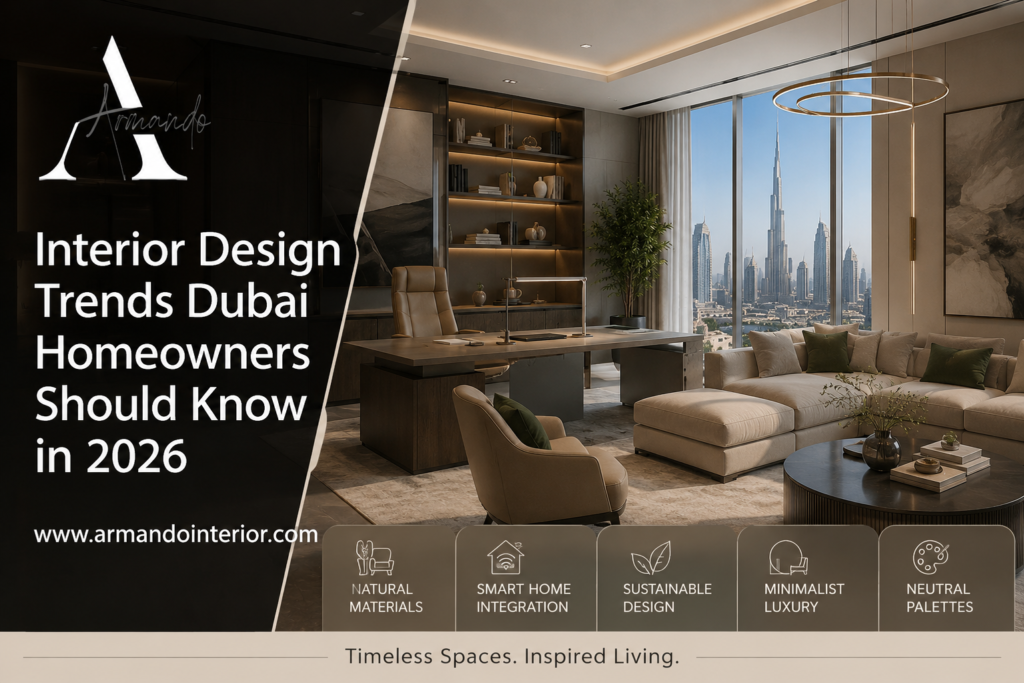
Dubai’s interior design landscape moves faster than most cities, shaped by a unique mix of luxury real estate growth, a genuinely international resident base, and a climate that demands specific material and layout considerations. As 2026 unfolds, several clear trends are shaping how hinteriors—some villas and apartments are approaching their interiors—some carrying over from recent years, others emerging fresh this year.
Here’s a practical look at the design trends actually influencing Dubai homes in 2026, and how to think about incorporating them without chasing every passing fad.
1. Warm Minimalism Replaces Stark Minimalism
Pure white, cold minimalism is giving way to what’s often called “warm minimalism”—clean lines and uncluttered spaces, but built on a palette of warm neutrals (sand, warm greige, and soft terracotta) rather than stark white and grey. This shift reflects a broader move toward homes that feel calm and uncluttered but still emotionally warm and livable, rather than sterile.
How to incorporate it: Choose warm-toned neutrals for walls and large furniture pieces, and introduce texture — linen, boucle, natural wood—rather than pattern or color to keep visual interest without breaking the calm palette.
2. Biophilic Design Becomes Standard, Not Optional
Bringing nature indoors — through materials, greenery, and light — has moved from a niche trend to a near-standard expectation in Dubai’s premium residential design. Given Dubai’s urban density and hot climate, biophilic design offers a genuine psychological benefit, connecting residents to nature within a controlled, comfortable indoor environment.
How to incorporate it: Beyond potted plants, this includes natural materials (wood, stone, rattan), maximizing natural light through window treatment choices, and even water features or living walls in larger villa projects.
3. Curved Furniture and Organic Shapes
Sharp, angular furniture is sharing space with — and in some homes, being replaced by — curved sofas, rounded dining tables, and organic-shaped furniture silhouettes. This trend softens interiors and creates a more relaxed, contemporary feel that pairs particularly well with the warm minimalism palette also trending this year.
How to incorporate it: A curved sofa or an oval dining table can serve as a strong anchor piece, paired with straighter-lined furniture elsewhere to avoid an overly soft, uniform look throughout the space.
4. Statement Ceilings
As walls have become simpler and more neutral, ceilings are increasingly where homeowners are investing design energy — coffered detailing, textured plaster, dramatic lighting installations, and even color are appearing overhead more than in previous years.
How to incorporate it: Even a single statement ceiling in a living room or dining area — through lighting design, subtle color, or textured plaster — can elevate a space significantly without requiring a full-room redesign.
5. Micro-Cement and Textured Wall Finishes
Micro-cement (microcement) continues to grow in popularity across Dubai homes in 2026, valued for its seamless, tactile finish that works beautifully in both wet areas (bathrooms, kitchens) and living spaces as a feature wall treatment. Its ability to create a soft, matte, artisanal look — quite different from flat paint or glossy tile — fits neatly into the broader warm minimalism trend.
How to incorporate it: Consider microcement for a bathroom or kitchen backsplash as a durable, elegant alternative to tile, or as a textured feature wall in a living or bedroom space.
6. Multi-Functional and Flexible Spaces
With more residents working from home at least part-time and family needs evolving, homeowners are prioritizing rooms that can genuinely serve multiple purposes — a guest room that doubles as a home office, a media room that converts to additional guest accommodation, or open-plan areas with flexible furniture arrangements.
How to incorporate it: Design with modular or multi-functional furniture from the outset (sofa beds, extendable tables, wall-mounted fold-away desks) rather than trying to retrofit flexibility into a fixed layout later.
7. Sustainable and Locally-Sourced Materials
Sustainability considerations are increasingly influencing material choices in Dubai’s premium residential market — not necessarily as a marketing point, but as a genuine homeowner priority around durability, indoor air quality, and long-term value. This includes a growing interest in locally-sourced or regionally-produced materials, reducing both environmental impact and shipping-related lead times.
How to incorporate it: Ask your designer about material sourcing and durability, not just appearance — natural, well-sourced materials often age better and require less frequent replacement than lower-grade alternatives.
8. Statement Kitchen Islands as Social Hubs
Kitchen islands have expanded beyond food preparation to become genuine social and entertaining hubs, particularly in open-plan villas and larger apartments. 2026 designs are leaning into larger islands with integrated seating, statement materials (waterfall-edge stone, contrasting wood), and lighting designed specifically to make the island a focal point.
How to incorporate it: If your kitchen layout allows, consider a larger island with a mixed-material design — a striking stone countertop paired with a warm wood or matte cabinetry base — and dedicated pendant lighting above.
9. Layered, Warm Lighting Design
Lighting design continues to move away from a single ceiling-mounted source toward layered, warm lighting throughout the home — cove lighting, wall washers, decorative pendants, and smart dimming controls working together rather than a single bright overhead fixture doing all the work.
How to incorporate it: Plan lighting layers early in any renovation or new design project — retrofitting proper layered lighting after finishes are complete is far more disruptive and costly than designing for it from the start.
10. Natural Stone Making a Strong Comeback
Natural stone — marble, travertine, limestone — is having a significant resurgence in 2026, both as flooring and as statement feature walls, after several years where engineered and printed alternatives dominated for cost reasons. Homeowners are increasingly willing to invest in genuine natural stone for its unique veining and long-term value.
How to incorporate it: Consider natural stone for a single high-impact area — an entryway floor, a bathroom feature wall, or a kitchen island — rather than throughout the entire home, balancing cost with visual impact.
11. Personalized, Collected Interiors Over Showroom Perfection
Following a period where many homes leaned heavily on cohesive, showroom-style furniture packages, 2026 is seeing more homeowners embrace a “collected” look — mixing vintage or antique pieces, art from personal travels, and custom furniture alongside newer pieces, creating spaces that feel genuinely personal rather than uniformly staged.
How to incorporate it: Don’t feel obligated to furnish every room from a single collection — intentionally mixing eras and sources, guided by a consistent color and material palette, often creates a more sophisticated, lived-in result.
12. Wellness-Focused Bathroom and Bedroom Design
Homeowners are increasingly designing bedrooms and bathrooms around genuine wellness — better sleep environments, spa-like bathroom experiences, and dedicated space for morning and evening routines, rather than purely aesthetic upgrades.
How to incorporate it: Consider elements like a freestanding soaking tub, a dedicated vanity area with proper lighting, blackout window treatments in bedrooms, and a calming, uncluttered color palette in these rooms specifically.
How to Use Trends Without Over-Committing
Trends are useful inspiration, but not every trend belongs in every home, and chasing all of them at once often results in a disjointed space rather than a cohesive one. A practical approach:
- Invest in trends through easily changeable elements (furniture, textiles, accessories) rather than permanent, expensive-to-change elements (flooring, structural finishes) unless you’re genuinely confident in the choice
- Choose one or two statement trends to lead your design (a curved sofa, a statement ceiling) and build a more timeless base around them
- Prioritize trends that align with genuine lifestyle needs — multi-functional spaces and wellness-focused design tend to have lasting value beyond their trend status, unlike purely visual fads
Frequently Asked Questions About Dubai Interior Design Trends in 2026
Are these 2026 trends relevant for both villas and apartments?
Most of these trends apply across property types, though some — like statement kitchen islands and outdoor biophilic elements — are naturally more relevant to villas with larger kitchens and outdoor spaces. Apartment owners can still incorporate the core ideas (warm minimalism, layered lighting, curved furniture, natural materials) at a scale appropriate to their space.
Which 2026 trend offers the best long-term value for homeowners?
Layered lighting design and multi-functional furniture tend to offer the strongest long-term value, since both improve genuine daily functionality rather than being purely aesthetic choices that may feel dated in a few years. Trends tied to specific colors or decorative styles are more likely to need refreshing sooner.
Is natural stone worth the investment compared to engineered alternatives?
Natural stone typically costs more upfront than engineered alternatives, but it offers unique character (no two pieces are identical) and often ages better over decades, whereas some engineered surfaces can show wear differently over time. For homeowners planning to stay long-term, natural stone in a high-impact area is often considered a worthwhile investment.
How do I incorporate trends without my home feeling dated in a few years?
The safest approach is investing in trends through easily changeable elements — furniture, textiles, lighting fixtures, accessories — while keeping permanent, expensive-to-change elements like flooring and structural finishes more timeless and neutral. This allows you to refresh your space as trends evolve without needing a full renovation.
Do these trends apply to commercial spaces as well as homes?
Many of these trends — warm minimalism, biophilic design, layered lighting, natural materials — are increasingly appearing in Dubai’s commercial and hospitality design as well, particularly in offices and F&B spaces aiming for a more residential, welcoming feel rather than a purely corporate aesthetic.
What trend from previous years is fading out in 2026?
Stark, all-white minimalism with cold-toned lighting is giving way to warmer, more textured interpretations of minimalism, and heavily saturated, trend-specific color schemes are being replaced by more considered, warm neutral palettes with color introduced through accessories rather than large surfaces.
Final Thoughts
2026’s interior design trends in Dubai reflect a broader shift toward warmth, texture, and genuine livability over purely showroom aesthetics — warm minimalism, biophilic elements, statement ceilings, and personalized, collected interiors are shaping how homeowners across the city are approaching their spaces this year. The strongest results come from selecting trends that genuinely suit your lifestyle and building a timeless foundation around them, rather than following every trend simultaneously.
If you’re planning a renovation or refresh and want guidance on which 2026 trends genuinely suit your home and lifestyle, Armando Interior offers design consultations to help translate current trends into a cohesive, personalized plan for your specific space.