
Jewelry Shop Interior Design: Ideas That Build Trust and Drive Sales
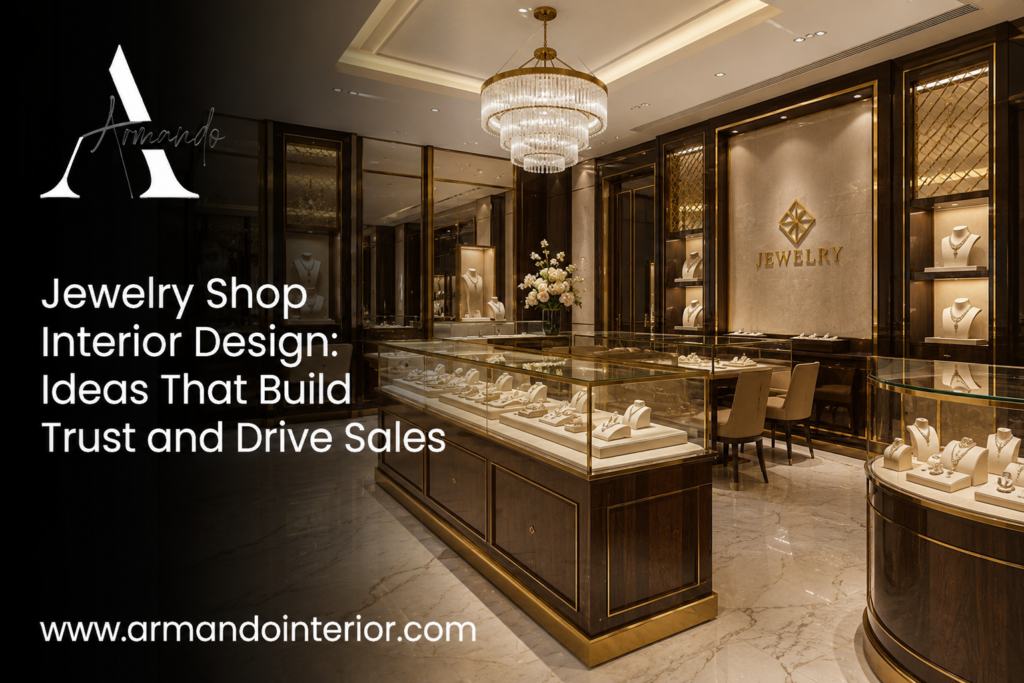
Walk into a jewelry store and, before you ever look at a single ring or necklace, your brain has already made a judgment. Is this a place I trust with my money? Does this brand understand luxury? Will the person helping me actually know what they’re talking about? All of that happens in the first three to five seconds, and almost none of it comes from the products on display. It comes from the room itself the lighting, the materials, the layout, the way sound moves through the space. For a category built entirely on trust, emotion, and perceived value, interior design isn’t decoration. It’s the sales strategy. Jewelry is one of the only retail categories where the product is small, the price is high, and the decision is emotional. A customer buying a $50 shirt doesn’t need much convincing. A customer considering a $15,000 engagement ring needs to feel safe, respected, and genuinely wowed. That’s a much heavier lift, and it’s one that falls almost entirely on the shoulders of the physical space. This guide walks through the design principles that separate jewelry stores that feel like showrooms from those that feel like glorified pawn shops, and shows how thoughtful interior design directly translates into higher average transaction values and stronger customer loyalty. Why Interior Design Matters More in Jewelry Than Almost Any Other Retail Category In most retail environments, design supports the sale. In jewelry retail, design often is the sale. Because the merchandise itself is small and frequently locked behind glass, customers can’t touch, try on freely, or examine products the way they would in a clothing or homeware store. The environment has to do the work of communicating value that the product can’t fully do on its own in that first glance. A poorly lit store with dated fixtures and mismatched flooring signals, consciously or not, that the jewelry inside might be poorly made or overpriced — regardless of whether that’s true. Conversely, a space with intentional lighting, quality materials, and a considered layout tells the customer, before a single word is spoken, that they are somewhere serious, safe, and worth their time. There’s also a security dimension unique to this category. Customers are aware, at some level, that jewelry stores are targets for theft, and a space that feels chaotic or poorly monitored can create subconscious unease. Good design reassures without ever feeling like a vault. It’s a careful balance, and it’s one of the reasons jewelry store interiors require a more specialized approach than most retail fit-outs. Lighting: The Silent Salesperson If there’s one element that matters more than any other in a jewelry store, it’s lighting. Diamonds and gemstones are designed by nature to interact with light — that’s literally what creates sparkle, fire, and brilliance. Flat, generic overhead lighting flattens all of that. A well-lit jewelry store uses layered lighting: ambient light to set the overall mood, accent lighting focused precisely on display cases to make stones and metals come alive, and task lighting at consultation desks so staff and customers can genuinely examine pieces up close. Color temperature matters enormously here. Warm light (around 2700K–3000K) tends to flatter gold, warm-toned diamonds, and skin tones, creating an inviting, boutique feel. Cooler light (4000K and above) makes white diamonds and platinum pop with more clarity but can feel clinical if overused. Most successful jewelry interiors blend the two — warm ambient lighting throughout the space with cooler, high-CRI (color rendering index) spotlights directly over cases. A CRI of 90 or above is generally the minimum worth considering; anything lower and stones simply won’t show their true color. Fiber optic and LED display lighting has also become the industry standard for case interiors because it produces minimal heat, which protects both the merchandise and the customer’s fingers when handling pieces. Dimmable systems allow a shop to shift the mood from bright and energetic during the day to warm and intimate for evening appointments or private viewings. Display Cases and Layout That Guide the Customer’s Journey The layout of a jewelry store should function like a well-told story, not a maze. Most successful stores use a loose horseshoe or racetrack layout, drawing customers along the perimeter past feature cases before opening into a central area with either freestanding vitrines or a consultation zone. This keeps sightlines open — customers should always be able to see a staff member and never feel boxed in or watched, both of which create discomfort. Case height and angle matter more than most people realize. Cases that are too tall create a barrier between staff and customer, making the interaction feel transactional and cold. The ideal case height typically sits between 38 and 42 inches, angled slightly so pieces are visible from a natural standing position without customers having to crane their necks or lean uncomfortably. Grouping merchandise thoughtfully — engagement rings in one zone, watches in another, statement pieces near the entrance as an aspirational anchor — helps customers self-navigate before staff even approach. Color Palette and Materials: Speaking the Language of Luxury Materials and color choices carry an enormous amount of unspoken meaning in a jewelry store. Deep, saturated tones — navy, emerald, burgundy, charcoal — paired with warm metals like brushed brass or antique gold create an atmosphere of heritage and craftsmanship. Lighter palettes with soft neutrals, marble, and champagne accents lean more contemporary and are often favored by bridal-focused or younger, fashion-forward brands. Neither approach is inherently better; the right choice depends entirely on the brand identity a store is trying to project. What matters more than the specific palette is material quality. Customers who are about to spend a significant sum on jewelry are, whether they realize it or not, evaluating everything around them as a proxy for quality — including the countertops, the flooring, the upholstery on the seating. Laminate that mimics stone, or fixtures with visible wear, undercut the very message the store is trying to send. Natural stone, solid wood, brushed