
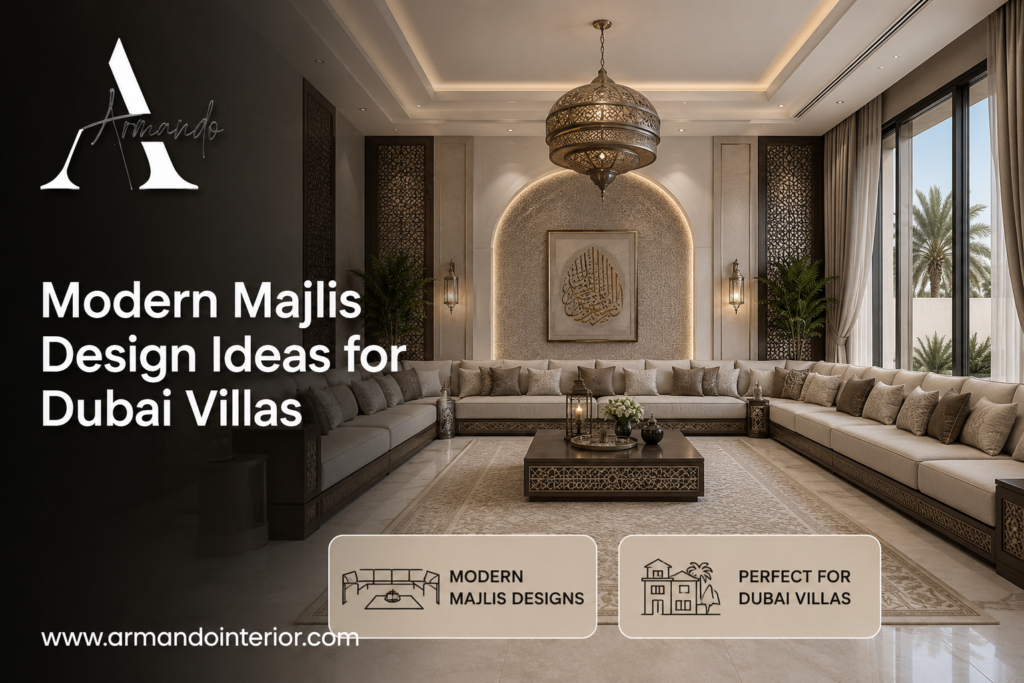
The majlis holds a place in Emirati and Gulf homes that goes far beyond a typical living room — it’s a space for gathering, hospitality, and cultural tradition, where family and guests are received with genuine care and respect. Designing a majlis today means honoring that tradition while creating a space that feels relevant, comfortable, and beautifully suited to contemporary Dubai villa living.
This guide explores how modern majlis design is evolving in Dubai villas — balancing traditional elements with contemporary comfort, materials, and layout thinking — and offers practical ideas for creating a majlis that feels both authentic and current.
Understanding the Purpose Behind Majlis Design
Before any design decisions, it helps to remember what a majlis is actually for: gathering, conversation, and hospitality, often for extended periods of time and across generations. This shapes design priorities differently from a typical Western-style living room:
- Seating needs to support long conversations comfortably — floor-level or low seating traditions matter, alongside genuine comfort for extended sitting
- The space often needs to accommodate larger groups than a standard living room, particularly for family gatherings and cultural occasions
- Separate majlis areas for men and women are still common in many Dubai villas, and each needs its own considered design
- Hospitality service flow matters — how coffee, dates, and refreshments are served and where guests are seated in relation to the host
1. Seating: The Heart of Majlis Design
Traditional low, floor-level seating (often arranged around the room’s perimeter) remains a defining feature of majlis design, but modern interpretations offer more comfort and flexibility:
- Built-in banquette seating along the walls, upholstered in rich fabrics, offers the traditional low-seating feel with better back support than floor cushions alone
- Modular seating arrangements allow the space to adapt for both intimate family gatherings and larger formal occasions
- A mix of traditional floor seating and elevated seating options accommodates guests of different ages and physical comfort levels
- Generous, deep seating (rather than shallow sofa-style seats) supports the longer sitting periods majlis gatherings often involve
2. Rich, Layered Textiles
Textiles are central to majlis identity — they bring warmth, pattern, and a sense of luxury that defines the space’s character:
- Deep jewel tones — emerald, burgundy, navy, and gold — remain popular for upholstery and cushions, evoking traditional richness
- Contemporary majlis design increasingly incorporates softer, warm neutral palettes — sand, camel, ivory — for a more understated, modern feel, especially in villas with a broader contemporary design language
- Layered cushions in varying sizes and textures — velvet, embroidered, textured weaves — add depth without needing an overwhelming pattern mix
- Quality rugs, often with traditional motifs reinterpreted in a modern palette, anchor the seating arrangement and add warmth underfoot
3. Ceiling Design as a Statement Feature
The ceiling is one of the most impactful design opportunities in a majlis, since seated guests naturally spend a lot of time looking up and around the room:
- Traditional geometric or Islamic-pattern ceiling details, reinterpreted with modern materials like gypsum or backlit panels
- Coffered or recessed ceiling designs that add architectural interest without overwhelming the space
- Statement chandeliers or layered pendant lighting, often a central visual anchor in more formal majlis designs
- Cove lighting integrated into ceiling detailing for a soft, ambient glow that suits evening gatherings, which is when majlis spaces are most often used
4. Flooring That Balances Tradition and Practicality
- Natural stone or marble flooring remains a popular choice for its sense of permanence and luxury, often paired with an area rug to soften the seating zone
- Warm-toned wood or wood-look flooring offers a softer, more contemporary feel while still reading as premium
- Underfloor heating is less relevant in Dubai’s climate, but material selection should still account for comfort during cooler winter evenings when majlis use often peaks
5. Lighting Design for Evening Hospitality
Since majlis gatherings frequently happen in the evening, lighting design deserves particular attention:
- Warm white lighting (2700K–3000K) throughout, avoiding cool or overly bright light that feels clinical rather than hospitable
- Dimmable lighting controls to adjust ambiance between daytime family use and evening formal gatherings
- A statement lighting piece — a large chandelier, a cluster of pendant lights, or an ornate lantern-inspired fixture — as a focal point that reflects the room’s importance
- Accent lighting on architectural or decorative details — wall niches, ceiling patterns, or feature walls — to add depth after dark
6. Feature Walls and Architectural Details
A well-designed majlis often includes at least one architectural or decorative feature that anchors the room’s identity:
- Carved wood paneling or mashrabiya-inspired screens, either functional (for privacy or light filtering) or purely decorative
- Natural stone feature walls, particularly behind the main seating area
- Arched niches or doorways, a nod to traditional Gulf architecture reinterpreted in a contemporary form
- Calligraphy or geometric art pieces as a refined, culturally resonant focal point
7. Separate Design Considerations for Men’s and Women’s Majlis
In many Dubai villas, separate majlis areas are designed for men and women, each with distinct design priorities:
- Men’s majlis areas often lean toward a more formal, structured design — deeper tones, more traditional detailing, and seating arranged for extended conversation and hospitality rituals like coffee service
- Women’s majlis or sitting areas often incorporate softer color palettes, more decorative and textural richness, and sometimes a more contemporary design language reflecting a broader range of use (family gatherings, informal visits)
- Both spaces deserve equal design investment — a common mistake is over-investing in one area while treating the other as an afterthought
8. Modern Majlis for Contemporary Family Life
Many Dubai families today want a majlis that honors tradition while fitting a more contemporary lifestyle — hosting friends casually, family movie nights, or multi-generational gatherings that blend formal and relaxed use. Design approaches that support this dual purpose:
- Flexible furniture arrangements that can shift between formal seated hospitality and more relaxed lounging
- Integrated technology — discreetly placed screens, sound systems, and lighting controls that don’t disrupt the traditional aesthetic
- A slightly more contemporary material palette — matte finishes, cleaner lines in millwork — paired with traditional textile richness, striking a balance between old and new
9. Outdoor Majlis Design
Many Dubai villas also feature an outdoor majlis area, used extensively during cooler months:
- Weather-resistant versions of traditional textiles and cushions, designed to withstand outdoor conditions while maintaining the same visual richness
- Shading structures — pergolas, retractable canopies — essential for comfortable use during Dubai’s warmer months
- Outdoor heating elements for cooler winter evenings, extending the usable season
- Lighting design that carries the indoor majlis’s warmth and ambiance outdoors, creating a cohesive experience across both spaces
10. Balancing Cultural Authenticity With Personal Style
The best modern majlis designs avoid two extremes — an overly generic “hotel lobby” aesthetic that loses cultural meaning, and an overly literal traditional recreation that doesn’t reflect the homeowner’s actual taste and lifestyle. The strongest results come from:
- Starting with genuine traditional elements that matter most to the family (specific textile patterns, ceiling details, hospitality flow)
- Layering in contemporary material and color choices that reflect current design sensibility
- Working with a designer who understands both the cultural significance of the space and current design trends, rather than treating it as a generic living room brief
Frequently Asked Questions About Majlis Design in Dubai
What size majlis is typical for a Dubai villa?
Majlis sizes vary significantly depending on villa size and family hosting needs, but a comfortable formal majlis for regular gatherings typically ranges from 30–60 square meters, with larger villas sometimes dedicating 80+ square meters to accommodate larger cultural or family occasions. The right size ultimately depends on how frequently large gatherings occur and how many guests need to be comfortably seated at once.
Should a majlis be designed differently from the rest of the villa’s interior style?
It’s common and generally recommended for the majlis to carry a slightly more traditional or formal design language than the rest of a contemporary villa, since it serves a distinct cultural and hospitality function. That said, the overall material and color palette should still feel connected to the rest of the home rather than feeling like an entirely separate design project.
What’s the difference between a majlis and a formal living room?
While both serve as formal gathering spaces, a majlis specifically reflects Emirati and Gulf hospitality traditions — often featuring perimeter seating arrangements, a focus on group conversation and hospitality service, and cultural design elements like geometric patterns or traditional textiles. A formal living room, by contrast, typically follows a more universal Western design approach without these specific cultural and functional considerations.
How much does majlis design typically cost in Dubai?
Majlis design costs vary widely based on size and material specification, but a well-appointed majlis with quality upholstered seating, statement lighting, and ceiling detailing typically ranges from AED 80,000–300,000 for the space alone, with premium material choices (natural stone, custom carved joinery, imported textiles) pushing costs higher.
Can a modern villa still include a traditional-style majlis?
Yes, and this is actually one of the most common requests from Dubai villa owners — a majlis that honors traditional hospitality elements (seating style, textile richness, ceiling detailing) while sitting within an otherwise contemporary villa design. A skilled designer can create a clear but harmonious transition between the majlis and the rest of the home’s design language.
Do outdoor majlis areas need the same design investment as indoor majlis spaces?
Outdoor majlis areas deserve genuine design attention, particularly since they’re used extensively during Dubai’s cooler months, but the material specifications differ significantly — outdoor textiles, furniture, and lighting need to be weather-resistant while still capturing the same visual warmth and hospitality feel as the indoor space.
Final Thoughts
A well-designed majlis honors its cultural role as a space of hospitality and gathering while feeling genuinely suited to how a family lives today. The strongest modern majlis designs in Dubai villas layer traditional richness — deep textiles, statement ceilings, warm lighting — with contemporary comfort, flexible seating, and thoughtful material choices that hold up to real, frequent use.
Armando Interior has extensive experience designing traditional and modern majlis spaces for villa owners across Dubai, balancing cultural authenticity with each family’s individual style and hospitality needs. A design consultation is a valuable starting point for translating your vision for this important space into a detailed, realistic design plan.