
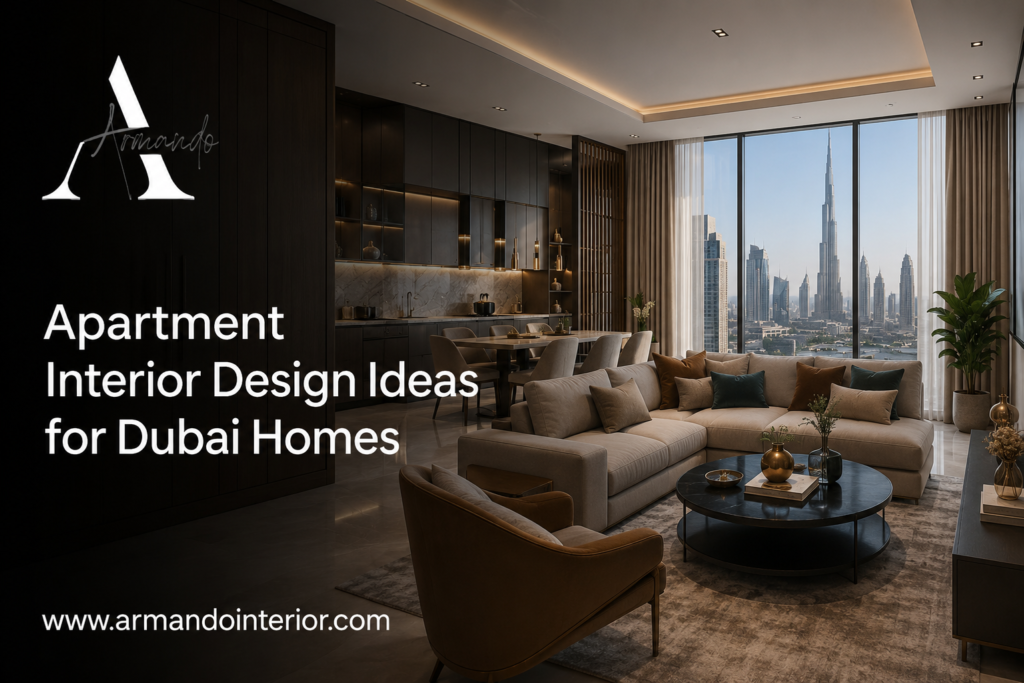
Dubai apartments come with a unique mix of advantages and constraints: floor-to-ceiling windows and skyline views on one hand, and often compact layouts, open-plan living, and strict community guidelines on the other. Designing an apartment here isn’t just about picking a style you like — it’s about making a space feel spacious, bright, and functional despite Dubai’s specific climate, lifestyle, and building realities.
Whether you’re in a high-rise in Downtown, a mid-rise in JVC, or a waterfront tower in Dubai Marina, this guide walks through practical, real-world apartment interior design ideas that work specifically for Dubai homes in 2026.
Understand Your Apartment’s Strengths Before You Design
Before jumping into colors and furniture, it helps to identify what your apartment naturally has going for it. Most Dubai apartments share a few common strengths:
- Abundant natural light from large windows, especially in newer towers
- Open-plan living and dining areas that flow into each other
- Skyline, sea, or golf course views that can become a design focal point
- Modern, neutral base finishes (light flooring, white walls) that are easy to build on
Good apartment design in Dubai works with these strengths rather than against them — for example, avoiding heavy curtains or bulky furniture that blocks light and views.
1. Lead With a Light, Warm Neutral Palette
Dubai’s design language has moved firmly toward warm neutrals — soft beige, sand, taupe, and off-white — rather than stark white or heavy dark tones. This palette does two things well: it reflects Dubai’s abundant natural light without feeling clinical, and it creates a calm backdrop against which you can introduce texture and a few bold accent pieces.
A common and effective formula is a 70-20-10 split: 70% neutral base (walls, large furniture), 20% secondary tone (rugs, curtains, accent walls), and 10% bold accent (art, cushions, decorative objects).
2. Make Open-Plan Living Work Harder
Most Dubai apartments combine the living, dining, and sometimes kitchen area into one open space. The biggest design mistake here is treating it as one undivided zone. Instead:
- Use rugs to define zones — a rug under the sofa and coffee table visually separates the living area from the dining area, even without walls.
- Vary ceiling treatment or lighting between zones — a pendant light over the dining table versus recessed or cove lighting in the living area creates subtle separation.
- Choose furniture that doesn’t block sightlines — low-profile sofas and open shelving keep the space feeling connected rather than chopped up.
3. Maximize Natural Light and Views
Dubai apartments, especially in towers, often have their best asset right outside the window. Design choices should frame and enhance that view rather than compete with it:
- Sheer curtains over heavy drapes allow light to filter through while still offering privacy, and can be layered with a blackout option for bedrooms.
- Keep furniture low near windows so sightlines to the view stay open.
- Mirrors placed opposite windows amplify both natural light and the sense of space — particularly effective in smaller apartments.
4. Smart Storage Solutions for Compact Layouts
Storage is consistently one of the top concerns for apartment dwellers in Dubai, especially in studio and 1-bedroom units. A few ideas that consistently work well:
- Built-in wardrobes with mirrored or matte-finish doors that extend floor to ceiling, using vertical space fully.
- Multi-functional furniture — storage ottomans, beds with built-in drawers, extendable dining tables.
- Under-window seating with storage in living rooms, which doubles as extra seating for guests.
- Vertical kitchen storage using tall cabinetry rather than relying only on base units.
5. Bring in Texture, Not Just Color
Because many apartments lean toward a neutral base palette, texture becomes the main tool for adding visual interest. Layering different materials — a boucle sofa, a jute or wool rug, linen curtains, a textured accent wall, rattan or wood accents — creates depth without needing bold color.
This approach also tends to age well; textures stay relevant far longer than trend-driven color choices, which matters if you’re designing a home you plan to live in for several years.
6. Design a Statement Feature Wall
A single, well-executed feature wall can transform an otherwise standard apartment. Popular approaches in Dubai homes right now include:
- Textured plaster or microcement in a warm neutral tone, adding depth without pattern
- Fluted wood paneling behind the TV unit or bed headboard
- Natural stone cladding for a more premium, tactile finish
- A gallery wall of curated art for renters or those who want flexibility to change the look later
7. Lighting Layers That Do More Than Illuminate
Good apartment lighting design uses at least three layers: ambient (general room lighting), task (reading lights, kitchen under-cabinet lighting), and accent (wall washers, cove lighting, decorative pendants). Relying only on ceiling downlights is the most common lighting mistake in Dubai apartments — it flattens the space and makes it feel like a hotel room rather than a home.
Warm white lighting (2700K–3000K) throughout living and bedroom areas tends to suit Dubai’s warm-toned interior palette far better than cooler white light, which can feel clinical.
8. Balcony and Outdoor Space Design
If your apartment has a balcony, don’t leave it as an afterthought. Even a small balcony can become a genuine extension of your living space with:
- Weather-resistant outdoor furniture suited to Dubai’s heat and occasional sandstorms
- Potted plants and vertical greenery to soften the hard edges of a high-rise view
- Outdoor-rated lighting for evening use, when Dubai balconies are most enjoyable
9. Kitchen Design for Open-Plan Apartments
Since kitchens are often visible from the living area in Dubai apartments, they need to look as intentional as the rest of the home:
- Handle-less, matte cabinetry for a clean, integrated look
- A cohesive color story between kitchen cabinetry and adjacent living area tones
- Under-cabinet lighting for both function and ambiance
- Open shelving styled with a few curated items, rather than a fully open, cluttered display
10. Personal Touches That Make It Feel Like Home
Beyond the structural and material choices, the details that make an apartment feel personal matter just as much:
- Curated artwork reflecting your taste, rather than generic mass-produced prints
- A mix of old and new — a family piece, a travel find, or an heirloom rug adds character that pure showroom furniture can’t replicate
- Plants, both real and high-quality artificial, to soften Dubai’s often hard, glossy interior surfaces
- Scent and soft furnishings — cushions, throws, and a good diffuser go further than people expect in making a space feel finished
Studio vs. 1-Bedroom vs. 2-Bedroom: Design Priorities Differ
- Studios benefit most from multi-functional furniture and clear zoning through rugs and lighting, since every square foot needs to work for multiple purposes.
- 1-bedroom apartments usually have room for a proper entryway moment and a defined dining area — worth investing in even if the space is modest.
- 2-bedroom+ apartments often used for families or as investment rentals benefit from a slightly more neutral, broadly appealing palette that photographs well and suits a wider range of tastes.
Common Apartment Design Mistakes to Avoid
- Overcrowding a small space with oversized furniture
- Choosing trend-heavy colors that will feel dated within a couple of years
- Ignoring lighting design and relying solely on the builder-installed downlights
- Blocking natural light and views with heavy window treatments
- Underestimating how much storage a Dubai lifestyle actually requires
Frequently Asked Questions About Apartment Interior Design in Dubai
What’s the best color palette for a small Dubai apartment with limited natural light?
Even in apartments with less direct sunlight, warm off-whites, soft sand tones, and light greige palettes tend to work better than stark white, which can look flat and cold under artificial light. Pairing a light wall color with warm-toned lighting (2700K–3000K) and reflective surfaces like a large mirror opposite the main light source helps compensate for lower natural light levels.
How much does it typically cost to redesign a 1-bedroom apartment in Dubai?
A furnishing and styling-focused refresh for a 1-bedroom apartment typically ranges from AED 40,000–90,000, while a more comprehensive redesign including flooring, lighting, and joinery updates can range from AED 90,000–180,000 depending on material choices and the extent of built-in storage involved.
Should renters invest in interior design, or is it only worth it for owners?
Renters can absolutely benefit from thoughtful design, particularly through furniture, lighting, textiles, and styling choices that don’t require landlord approval or permanent alteration. Investing in quality, movable furniture pieces means the investment travels with you to your next home, unlike fixed renovations tied to a specific property.
How do I make my apartment feel bigger without knocking down walls?
Strategic mirror placement, a consistent light color palette across walls and flooring, furniture with visible legs, decluttering, and maximizing natural light through sheer window treatments are all effective ways to make an apartment feel more spacious without any structural changes. Vertical storage solutions also free up valuable floor space that visually expands the room.
What’s the biggest mistake people make when designing a Dubai apartment?
Two mistakes come up repeatedly: choosing furniture that’s too large for the actual room dimensions, and relying entirely on the builder-installed ceiling downlights instead of investing in layered lighting design. Both mistakes are relatively inexpensive to avoid but have an outsized negative impact on how finished and considered a space feels.
How often should I update my apartment’s interior design?
There’s no fixed rule, but a practical approach is refreshing soft furnishings, accessories, and paint every 3–5 years to keep the space feeling current, while treating larger investments like flooring, custom joinery, and major furniture as 8–12 year decisions. Choosing timeless base elements and expressing trends through easily replaceable accessories reduces how often larger, costlier updates are needed.
Final Thoughts
Great apartment interior design in Dubai isn’t about following a single trend — it’s about working intelligently with natural light, open layouts, and the compact realities of tower living, while still creating a space that feels warm, personal, and distinctly yours. A neutral, textured base, thoughtful zoning, layered lighting, and a few well-chosen statement pieces go a long way toward transforming a standard apartment into a home that feels custom-designed.If you’d like professional input on your specific layout, Armando Interior works with apartment owners across Dubai — from studios to multi-bedroom units — to design spaces that balance style, functionality, and budget. A design consultation is a practical first step to seeing what’s genuinely possible in your apartment before committing to any changes.